
Person Centred Therapy in Hackney E8
Looking for person centred therapy?
Space To Be You Therapy Rooms in Hackney E8 has many counsellors and psychotherapists who work in a person centred way.
For some it is their core training, for others it is part of a broader integrative approach.
We’re on Mare Street, in the heart of Hackney (E8), with sessions available in person or online.
Alternatively, you can search our Hackney therapist directory.
What is a person centred therapist?
A person centred therapist is a counsellor or psychotherapist who has trained in an approach developed by the American psychologist called Carl Rogers, who was prominent in the 1940s and 50s.
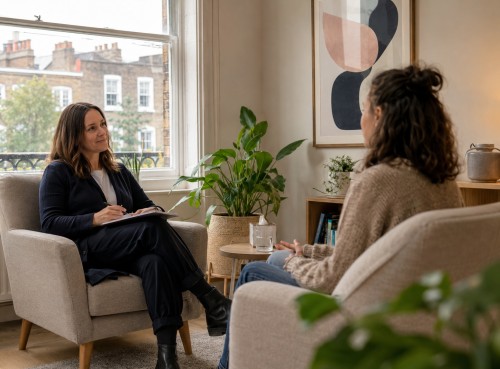
It is sometimes called “client-centred therapy”, “person centred counselling” or “Rogerian therapy”. These are all the same approach but with different names, and they fall under the humanistic family of therapy types.
The main feature of person centred therapy is who leads. You, as the client, set the direction and decide what matters, and it’s the therapist’s job to create the conditions in which you can work things out, not to assess you or provide you with a plan.
Person centred is an approach that a therapist trains in, not a treatment for a condition. It is a way of working and works with a wide range of difficulties.
It is also among the most widely practised approaches across Hackney and East London. Many local counsellors work this way as their main modality, but many more draw on it within what’s called an “integrative approach”. See below for further information.
What does a person centred therapist actually do?
There are three conditions that a therapist will create in their sessions, which are called core conditions:
- Empathic understanding – they work to see things as you see them, from the inside, rather than trying to interpret you through a theory.
- Unconditional positive regard – nothing you bring to the sessions is judged or thought less of. People can sometimes find that hard to believe until they experience it for themselves.
- Congruence – which means they are a real person in the room, not wearing a professional therapist mask. You get authentic responses rather than rehearsed ones.
Sessions typically last 50 minutes, and held at the same time each week. You start the conversation wherever you want, and there is no agenda set for you, nor homework given.
Your therapist will reflect back what they hear, ask you if they have understood correctly, and they will stay with the difficult parts of the conversation rather than moving you past them.
Ensuring that the client is truly understood can be challenging work and the therapist won’t simply nod along. Sessions can also feel challenging for the client, and your first few sessions might feel a little strange if you expect to be guided or given advice, although most people adjust quickly.
Because Hackney is very diverse, many people may spend their early sessions explaining their background, family or culture before reaching what they initially came to discuss. But being understood as yourself rather than fitting into a category or type is one of the key benefits of the approach.
Some of our therapists also work in languages other than English, including Turkish, Portuguese, Spanish, German, Greek and Polish.
Person centred therapy vs CBT therapy
Both are talking therapies with strong evidence behind them, and neither is better than the other; they are just different. Here are a few key comparisons:
- Structure – CBT works to a plan, with specific techniques, and clients are often given tasks to do between sessions. Person centred therapy has no set structure.
- Focus – CBT looks at current thoughts or patterns of behaviour, whereas person centred therapy looks at your experience as a whole.
- Who leads – a CBT therapist will steer the conversation. A person centred therapist follows you where you take them in the conversation.
- Length – CBT is typically time-limited, whereas person centred work is often open-ended, though it doesn’t have to be.
Plenty of therapists work integratively and draw on both modalities, and both are easy to find in Hackney. At Space To Be You we have over 60 therapists to choose from.
Should you see a person centred therapist?
This therapeutic approach tends to suit you if any of the following are true:
- you prefer to be understood rather than instructed
- you can be hard on yourself, or live with a harsh inner voice
- you have tried structured, worksheet-led therapy and found it too much
- you are in the middle of a change, such as the end of a relationship, moving home, or making a significant career change
- you cannot name one clear problem, only a sense that something is “not right”
- you are experiencing a bereavement or a loss
Person centred therapy suits a lot of people, but it is not necessarily the recommended starting point for everything. For obsessive-compulsive disorder (OCD), post-traumatic stress (PTSD) and some eating difficulties, guidance in the UK suggests more structured approaches such as trauma-focused CBT or EMDR.
If any of that sounds like what you are dealing with, it is worth telling your therapist when you first get in touch.
Does working with a person centred therapist help?
Humanistic and experiential therapies, which include person-centred therapy, have significant evidence showing that they can meaningfully reduce clients’ distress. For most common issues the results are similar to those of other talking therapies, such as CBT.
The most relevant UK evidence comes from a large trial run by the NHS, which compared person centred counselling with CBT for depression. In the short term the two performed similarly, however after a longer term follow up CBT held a slight advantage, particularly for more severe depression.
One other finding that is worth mentioning is that more active, process-guided therapy tends to produce better results than strictly non-directed therapy. However, it’s also worth noting that a skilled person centred therapist is indeed doing something, rather than simply receiving you.
Across every therapy type, the quality of the relationship between therapist and client remains one of the most consistent predictors of whether therapy helps.
That is what the person centred approach is built around, so we recommend really taking time to find the right therapist for you.
What qualifications should a person centred therapist in Hackney have?
These standards are national, so a therapist’s registration means the same in Hackney as anywhere else. What varies locally is how many profiles you have to compare. When browsing profiles, we suggest you look for:
- Core training – a counselling diploma at Level 4 or above with a person centred or humanistic core, or a Master’s degree in a humanistic discipline. The training tells you more than the job title does.
- Registration – with the BACP, UKCP or NCPS. Those organisations give you an ethical framework, a complaints route if something goes wrong, and a requirement to keep their practice current.
- Clinical supervision – every practising therapist should be in regular supervision. It is a professional requirement, not a sign of inexperience.
- Professional insurance
All therapists at Space To Be You are registered with or accredited by a professional body, fully qualified and insured. The only exceptions are trainee therapists, whose trainee status is clearly stated on their profiles. You can check any of this on our therapist directory.
How can you tell if a Hackney therapist is genuinely person centred?
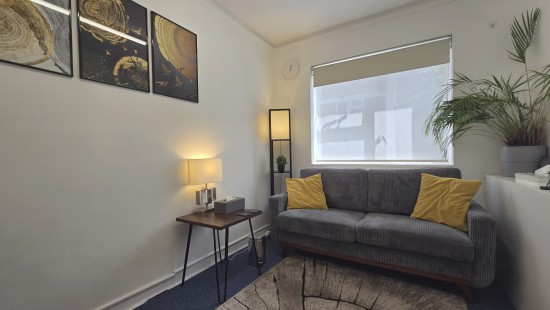 When searching for a psychotherapist or counsellor around London Fields, Hackney Central or Dalston, you will find dozens of profiles, with many using the phrase “person centred”.
That is the real local difficulty: not too little choice, but too much of it looking very similar.
The phrase “person centred” can be used in two ways:
1) as the name of a modality someone has trained in for years, or
2) as shorthand for warm and friendly.
Both are honest, but they are not the same thing, and you are entitled to know which you are getting.
Four practical checks we suggest you do are:
- Look for the training – Does the therapist’s profile mention a person centred or humanistic qualification, or just use the phrase as an adjective?
- Check how it is listed – Is person centred named as their primary approach, or is it one of several modalities listed?
- Ask at the initial consultation – Ask the therapist how directive they are, and who sets the agenda. A trained person centred therapist will have a clear answer.
- Notice what they describe – Some profiles say what the therapist does; others only say how they are. The first tells you more.
None of this rules out integrative counsellors or psychotherapists, as many draw heavily on person centred principles and can be an excellent fit. It is simply a different offering, and worth knowing which you are choosing.
Where can you find a person centred therapist in Hackney?
Our rooms are in the Mare Street Wing, on the St Joseph’s Hospice site in E8. Sessions take place in person or online, and we are within walking distance of Hackney Central, London Fields, Cambridge Heath and Bethnal Green stations.
That also puts us within reach of Dalston, Clapton and Stoke Newington, and manageable from further out if you are travelling after work. Our therapists have experience of Hackney’s diverse and multilingual communities, so your context is more likely to be understood than explained.
Because we are a large therapy centre rather than one individual practice, you can compare several approaches before deciding, or ask us to help match the therapist for you.
How do you choose the right person centred therapist in Hackney?
Finding the counsellor or psychotherapist is relatively straightforward:
1) Browse our directory – Read several profiles rather than the first you like.
2) Check therapist registration – with the BACP, UKCP, NCPS etc.
3) Book an initial consultation – Remember, this is a conversation, not a commitment.
4) Ask how they work – open-ended, time-limited, led by them or led by you.
5) Think about the practicalities – How will you get to a session every week, after work, on a bad day, across the borough? Do you want to see your therapist in person on Mare Street, online, or a mixture?
6) Notice how you feel in the room – Once training and registration are in place, fit matters more than credentials.
It is completely normal to meet more than one therapist before deciding, and no one will take it personally.
Changing therapists later is totally fine too, and not seen as a failure. It is better than continuing and things not working out. Person centred work is often open-ended, though shorter-term work is available. It is worth asking about the expected length of therapy during your initial consultation.
NEED HELP CHOOSING A PERSON CENTRED THERAPIST?
If you’d like to be matched with a Hackney person centred therapist, please click below or contact one directly on our therapist directory page.